
Kitchen-floor grease film
Degreaser chemistry and agitation break down fryer mist and cooking oils that bond to tile. Removing the film helps improve traction and makes daily mopping more effective.
Serving Garland, Texas & surrounding areas
Mon–Fri 8am–6pm · Sat 9am–2pm
Restaurant floor cleaning in Garland
Deep degreasing for commercial kitchen tile and grout that helps reduce slip risk, lifts embedded buildup, and keeps your floors looking inspection-ready without disrupting service.

Built for restaurant traffic
Restaurant floors in Garland take a beating: fryer splash, tracked-in grit from parking lots, syrup and drink spills in the dining room, and constant foot traffic through the expo line. On tile, that buildup settles into grout lines and the micro-texture of the surface. Over time it turns into a dark, slick film that routine mopping spreads around instead of removing.
Garland Restaurant Cleaning provides Restaurant Floor Cleaning Services designed for commercial kitchens and front-of-house tile. We focus on the parts that create problems in real operations: degreasing around fryers and dish areas, restoring traction on greasy walk paths, and pulling out soil trapped in grout. The goal is simple: cleaner floors that feel less slippery, dry faster, and hold up better between cleanings.
Our crews work from our location at 706 E Walnut St, Suite 4 in Garland, so scheduling is set up for restaurant realities: after-hours windows, early mornings, and planned cleanings that fit around deliveries and prep.
Floor-cleaning priorities
Degreaser chemistry and agitation break down fryer mist and cooking oils that bond to tile. Removing the film helps improve traction and makes daily mopping more effective.
Restaurant Grout Cleaning pulls out embedded soil in porous grout, especially along cook lines and at transitions near mats where grease and dust pack in.
Baseboards, toe-kick areas, and the first 6 to 12 inches under many equipment edges often hold the worst buildup. Detail work prevents re-soiling from those boundaries.
Restaurant Tile Cleaning in high-traffic lanes removes sticky residue and tracked grit that dulls tile and grinds into grout with every step.
The areas between kitchen, dish, and service line tend to get wet and greasy. Restaurant Floor Degreasing focuses on those hot spots to reduce the slick feel underfoot.
Controlled soil removal
A true degrease is more than scrubbing harder. For Commercial Kitchen Floor Cleaning, the difference is chemistry, dwell time, agitation, and recovery.
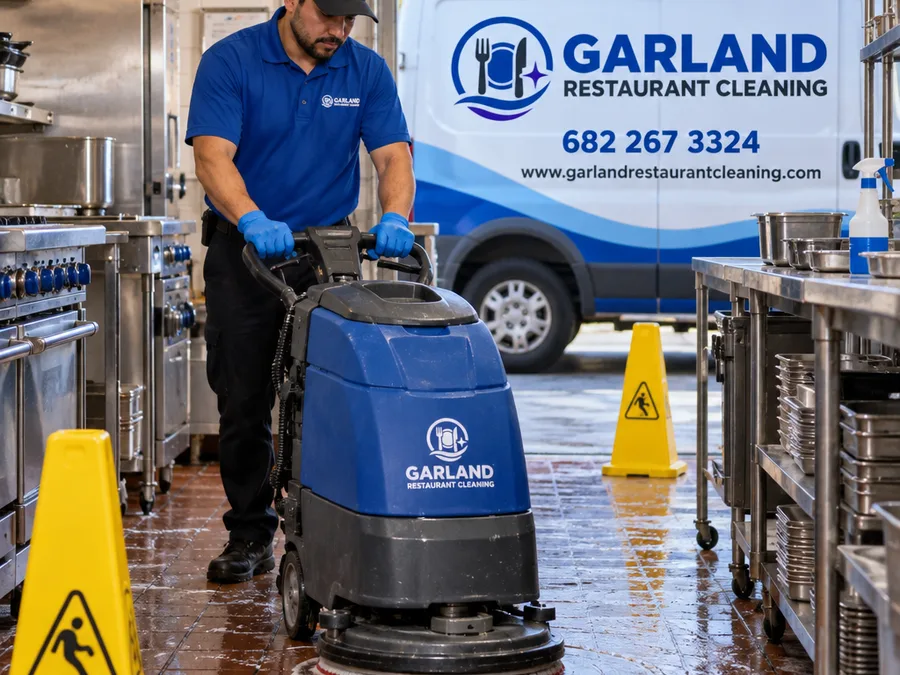
We start by identifying the heavy zones: fry stations, around dish machines, drink stations, and any place mats have been trapping soil. Then we apply a commercial degreaser appropriate for tile and grout, allow dwell time so it can break the bond, and mechanically scrub to lift the film.
The step many crews skip is the recovery. We rinse and extract so loosened grease and soil leave the floor instead of drying back into the grout. For kitchens, we also pay attention to water control so runoff doesn't migrate into storage areas or under walls.
If you are planning broader professional restaurant cleaning for the restrooms, dining room, or back-of-house touchpoints, floor work pairs well with a scheduled deep clean so your whole facility resets at once.
 Rinse-water recovery
From walkthrough to dry plan
We confirm the areas to be cleaned (kitchen, dish, walk paths, dining room tile), note heavy grease zones, and set expectations for what can and can't be restored in one visit.
We coordinate what needs to be moved and what stays in place, protect nearby surfaces as needed, and set up a workflow that keeps entrances and exits clear.
Kitchen Floor Degreasing starts with targeted product application and dwell time, then mechanical agitation for consistent results across tile texture and grout.
We rinse to remove suspended soils and recover water so grease doesn't redeposit into grout lines or leave a slippery residue.
We do a final traction and appearance check, address edges and corners, and confirm a realistic dry-time plan so staff can reopen safely.
Built around your service window
Restaurant floors don't get dirty on a schedule. They get dirty when ticket volume spikes, when the weather brings in grit, and when oil mist settles night after night. In Garland, many restaurants cluster along busy corridors where parking lots and sidewalks track fine dust and grit inside, which mixes with kitchen grease and makes grout lines look darker faster.
We commonly plan Commercial Floor Cleaning in Garland around your slowest hours. For some operations that is late night after close; for others it is early morning before prep. If your restaurant is near the downtown Garland area around the Square, we also factor in foot traffic and delivery timing to avoid blocking access.
If your floors are already heavily loaded with grease, the first visit is often a reset. After that, a recurring schedule keeps grout from reloading and helps daily mopping become a maintenance step instead of a battle.
Planning your floor-cleaning scope
Restaurant floor cleaning in Garland typically ranges from about $250 to $900+ per visit, depending on square footage, how heavy the grease buildup is, and how much detail work is needed along edges, grout lines, and transitions. A smaller back-of-house tile area may fall at the low end, while a full kitchen plus dining-room tile and grout runs higher.
Final price changes with access (tight equipment lines take longer), grout condition, floor texture, and whether a first-time reset is needed. The exact scope and cost are confirmed after a quick on-site walkthrough.
Inside the work


Practical answers
Most commercial kitchen floor cleaning jobs take 1 to 4 hours, depending on the square footage, the amount of grease buildup, and how many tight edges (around equipment fronts, corners, and transitions) need detail work. A first-time Restaurant Floor Degreasing visit often takes longer than recurring maintenance because we are removing bonded buildup rather than fresh soil.
Yes, removing the greasy film usually improves traction right away because that film is what creates the slick feel underfoot. The result still depends on your tile texture and how quickly grease is reintroduced, so many Garland operators schedule periodic Restaurant Floor Cleaning Services as a reset while keeping up daily spot cleaning and mat management.
We can clean around most equipment and still get meaningful results, especially in walk paths and along the accessible edges. If you want the best possible grout restoration under and behind certain pieces, we will identify what is practical to move during the walkthrough and build the scope around what your team can safely relocate.
Steam can help in specific situations, but most Restaurant Tile Cleaning and Restaurant Grout Cleaning results come from the right degreaser, dwell time, mechanical agitation, and thorough rinse-and-extract recovery. The best method depends on the tile type, the soil load, and how much water control is needed in your kitchen.
Many restaurants do best with a deep clean every month or quarter, but the right interval depends on fryer volume, how much oil mist settles, and how quickly grout darkens in your busiest lanes. If you are seeing slick walk paths, persistent odors near the dish area, or grout lines staying dark after mopping, it is usually time for Kitchen Floor Degreasing again.
Clearing loose items from the floor, lifting lightweight mats, and identifying any problem areas (especially near fryers and dish) helps us start quickly. During scheduling we will confirm what needs to be accessible, what can stay in place, and what areas you want prioritized for Commercial Floor Cleaning Garland service.
Tell us what areas you want cleaned and your best service window. We will confirm the scope, focus on the grease hot spots, and set expectations for results and dry time before any work starts.